Make a Tiramisu Fridge AI Snack-Reveal Clip
Build the fridge-camera reveal around a clear face or muzzle and one readable bite.
Choose who gets caught
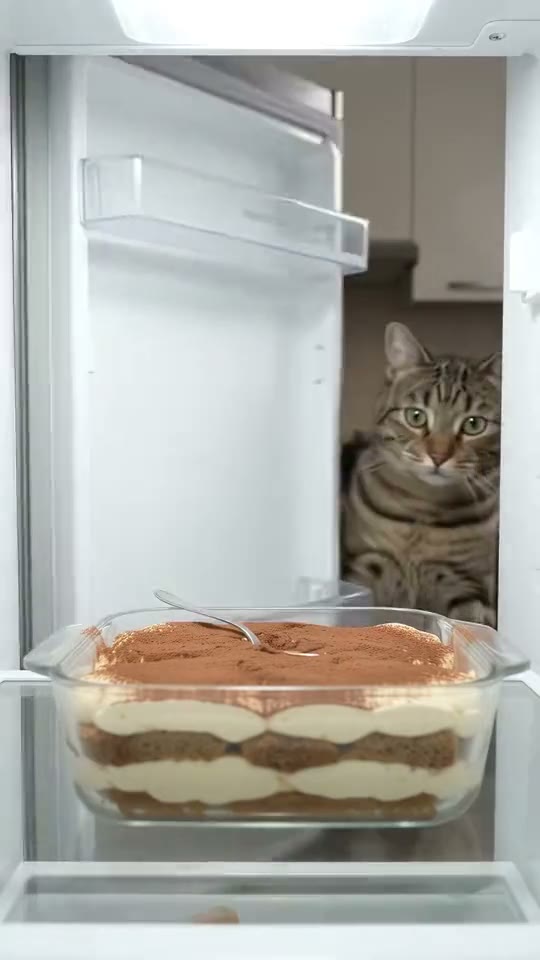
Preview a person and a cat take in Tiramisu Fridge AI. The fridge opening gives the audience a frame within the frame. Use a bright, clean photo with the eyes and mouth or muzzle visible. A photo that already has a hand or a bowl blocking the face can make the snack beat hard to read.
Compare the example clips before you generate
Watch the Tiramisu Fridge examples once through, then scrub the preview to see where you would pause. Begin with the clip that frames the feature you want viewers to remember. On a second pass, compare how much space each take leaves around that feature as the subject moves. These times and dimensions describe the preview files; check the generator for current settings.
Late Night Snack (540 × 960, 8 seconds)
Use the door and its light to mark the reveal. Look for a beat where the face and tray can both be seen. For your opening, look for the light changing as the door opens. Put your own source beside the preview at phone width and check the door edge, tray and muzzle or lips. If the main detail is already hard to pick out in a still, compare another source or a preview with more separation before generating.
Tabby Cat (540 × 960, 10 seconds)
A tabby version gives you a fur pattern and paw position to check around the tray. To plan the first look toward the dessert, check the frames just before and after the corresponding movement. Note which object or part of the subject first approaches the crop. Keep the last usable frame on either side as a potential trim point.
Kitten with a Bow (540 × 960, 10 seconds)
With a kitten, the smaller face can vanish behind the dessert. Keep the camera far enough back to see the lean and the reaction. Work backward from a quiet reaction in the fridge frame. Find a frame that could serve as the cover or the start of the next shot. Check it at the intended viewing size. If the important detail disappears there, test the crop in the edit first.
Keep the dessert and camera position stable
Start with the built-in scene so the camera stays inside the fridge and the dessert has a clear position. If you make a prompt change, ask for one simple detail such as a smaller bite. For a pet take, use the food as a fictional prop and keep the pet’s anatomy clear.
Prepare the first photo around the action
Put the photo beside the preview and look at what each frame asks the model to show. A face-led opening can work from a close portrait. If the scene then shows footwork, a large arm movement or an important object beside the body, start with the uncropped original or take one wider photo at a similar camera height. Save that file separately so you can go back to the same input after a failed test.
Put the character far enough back that the fridge edge and tray are both visible. For a cat or pet version, pick a photograph that shows the muzzle and the nearby paws. Let the light reveal the face first. A small lean works when a large reach makes the tray bend or hide the reaction.
For this scene, make the door edge, tray and muzzle or lips your first check. Open the file at the same width as your draft and see which part of that detail remains clear. If the sample and your source make that check difficult, try a smaller lean with hands or paws away from the tray edge. Choose material you have permission to use for the finished audience. With two people in an edit, approve the sources separately and identify which shot introduces each person.
Check the door, tray and reaction
- Watch the example from the opening door to the last look. Compare a person and a cat take, and choose the one where the subject’s reaction reads without a caption.
- Use one front-lit photo with eyes and mouth or muzzle visible. For a pet, keep its paws and body shape clear if the scene asks it to reach toward the tray.
- Keep the inside-fridge camera and dessert placement on the first attempt. A short note about a smaller bite or a held look is easier to assess than several new props and movements.
- Review the light at the door, the tray edge and the moment the face becomes clear. Trim to the strongest reaction if the hands or food become less stable afterward.
Two short prompts to try with the selected scene
Start with the direction supplied by Late Night Snack or the example you picked. For a revision, write what should be visible in shot order. Preserve one subject feature and one main action, then stop. Keep the same scene and source on a prompt test so the result tells you whether the new direction helped.
First pass
Start with the closed fridge and reveal the subject in the light as it opens. Keep the tray below the face. Show a small lean toward the dessert.
Read the brief once against the preview and decide which detail does the most work. The first look should tell the viewer who is there, and the move should read at normal speed. If your prompt introduces a second setting, a different person or an extra camera move, take that instruction out for this first pass.
One focused revision
Keep the door edge and tray still. Give the subject a short reaction with hands or paws clear of the tray edge.
When the tray bends or blocks the mouth, test a smaller lean with hands or paws away from the tray edge and keep the rest of the setup steady. Compare the same action in both takes, using stills if movement makes the difference hard to see. A working first version is also a reference for your next draft. Save its source, chosen scene and short note together.
Review the moment the door opens
Check the opening light, the first clear look and the point where the subject reaches the tray. If the face looks right but the tray bends, simplify the hand motion or choose a take with less contact. End on the reaction instead of holding a frame where the scene starts to drift.
For a curious cat, start with a front-facing photo and choose the take where it looks toward the tray first. Try a short note to keep the muzzle markings visible. Inspect the door edge and the cat’s nose as the camera sees inside.
What to check at the opening, action and ending
Before the action
Use the light changing as the door opens to check the door edge, tray and muzzle or lips. Compare the generated frame with your source at the same viewing size. Check that the feature you care about is visible before the subject turns, the camera moves or a prop enters. If it is already missing, work on the input or framing first. A later adjustment has more to build on when the opening already looks right.
At the main beat
Around the first look toward the dessert, scrub a few frames in both directions. If the tray bends or blocks the mouth, locate the first bad frame and check whether something crosses the subject there. A problem that starts when the hand crosses the face calls for a different correction from a photo that already lacks the right profile. Test a smaller lean with hands or paws away from the tray edge. Hold the other inputs steady and repeat the same pause on the new output.
After the move
Find a quiet reaction in the fridge frame and decide whether it is a usable final frame or a cut point. Play the full clip at normal speed with the sound muted, then turn the sound back on and play it again. The first pass tells you whether the picture explains the action. The second pass lets you hear whether music or dialogue arrives early enough to make sense without masking the reply. If an action only looks awkward when stepped through frame by frame, judge it in the actual export before rebuilding the shot.
Check the quote and prepare the finished cut
Open the Tiramisu Fridge editor, choose the actual scene and settings, and read the quote shown before submitting. You can check Pavo AI Video pricing for plan details. After submission, use the task state to find the result. Review a completed take before starting another one. If you do need another attempt, write down the one change you are testing.
Keep the clean export and make a separate copy for sharing. Check the cover frame and watch the final copy at normal speed. Add a soundtrack or a caption in the edit where you have the rights to use it. Keep any disclosure appropriate to your destination and audience with the version you send, especially when a recognizable person appears in a fictional performance.
Give the exported file one last check for the door edge, tray and muzzle or lips. If the shot needs another pass, keep the exported baseline so the next change is easy to judge. For a separate worked example or a more focused workflow, read AI Meme Video Ideas From October 28, 2026.
Common questions
Should I take the source inside a fridge or in low light?
Use normal, clear light for the reference. Let the example supply the fridge angle and contrast. A brighter source gives you more detail to compare when the door opens.
What is a good alternative to a large bite?
Use a glance at the tray, a small lean or a brief pause after the door opens. The fridge-camera setup carries the joke even when the contact with the dessert is short.